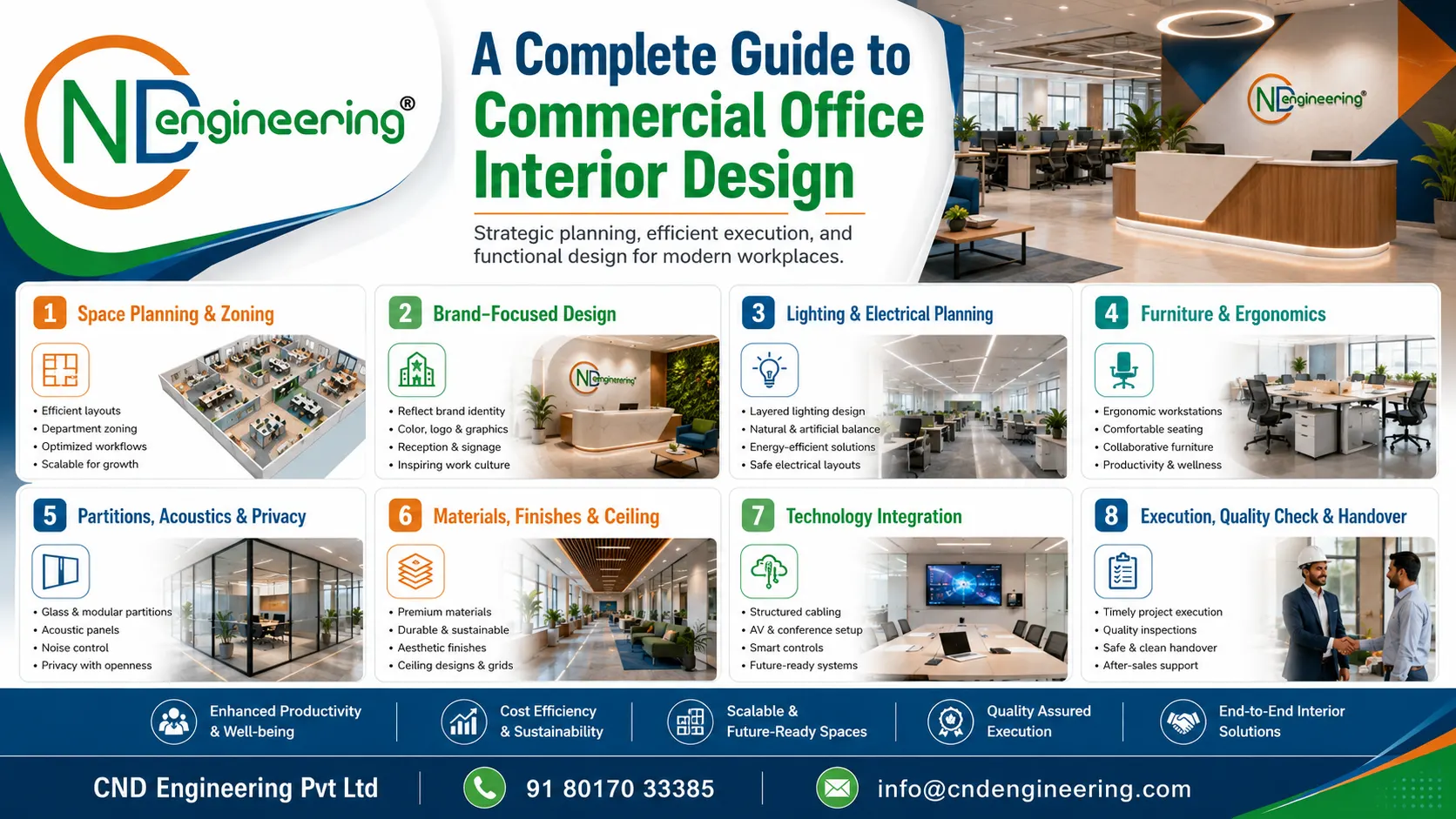
Commercial office interior design guide for Kolkata businesses
Modern Planning, Budgeting, Execution, Sustainability & Productivity Strategies for Businesses in Eastern India
Subtitle: Everything businesses need to know about planning, designing, budgeting, executing, and optimizing high-performance commercial workspaces in Kolkata.
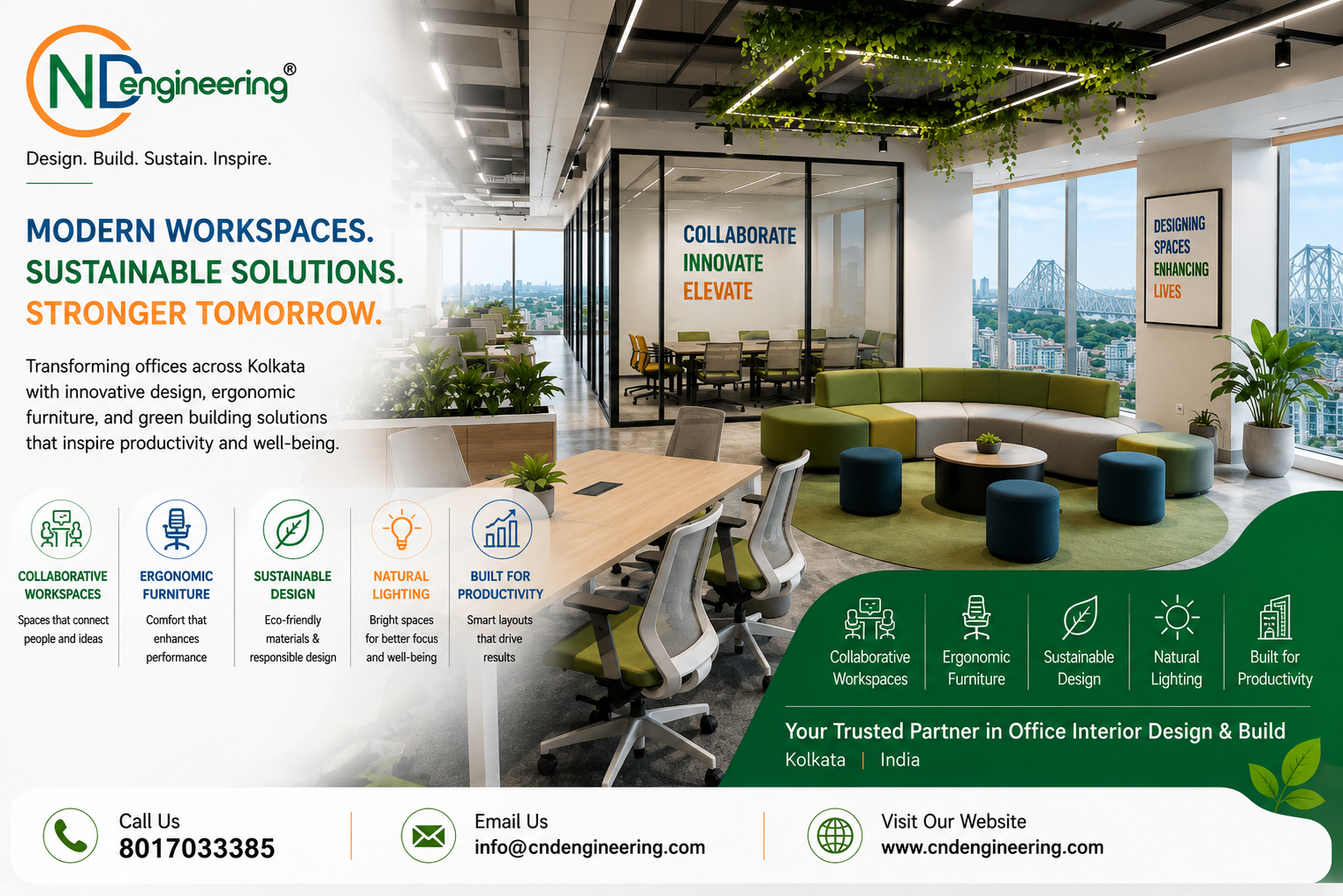
Introduction
Commercial office interior design is no longer just about aesthetics. In 2026, workspace design directly influences:
- Employee productivity,
- Operational efficiency,
- Workplace wellness,
- Talent retention,
- Energy performance,
- Collaboration,
- Brand perception,
- And long-term business scalability.
Companies across Kolkata — from IT firms in Sector V to startups in New Town and corporate offices in Park Street — are increasingly investing in strategic workspace environments that improve both employee experience and business performance.
A well-designed office is now considered a competitive advantage.
This complete guide explains everything organizations need to know before starting a commercial office interior project in Kolkata, including:
- Workspace planning,
- Budgeting,
- Office layouts,
- Materials,
- Sustainability,
- Execution,
- Compliance,
- Timelines,
- Ergonomic standards,
- Productivity optimization,
- And future-ready workspace trends.
Why Commercial Office Design Matters in 2026
Modern offices are designed to support:
- Hybrid work models,
- Collaboration,
- Focused work,
- Employee wellness,
- Sustainability,
- And organizational culture.
Research consistently shows that workspace quality affects:
- Productivity,
- Absenteeism,
- Employee satisfaction,
- Creativity,
- And retention rates.
Poorly designed workspaces create:
- Workflow inefficiencies,
- Acoustic distractions,
- Ergonomic problems,
- Higher operational costs,
- And reduced morale.
Meanwhile, optimized commercial interiors help businesses:
- Improve operational flow,
- Strengthen company culture,
- Impress clients,
- Support scalable growth,
- And reduce energy consumption.
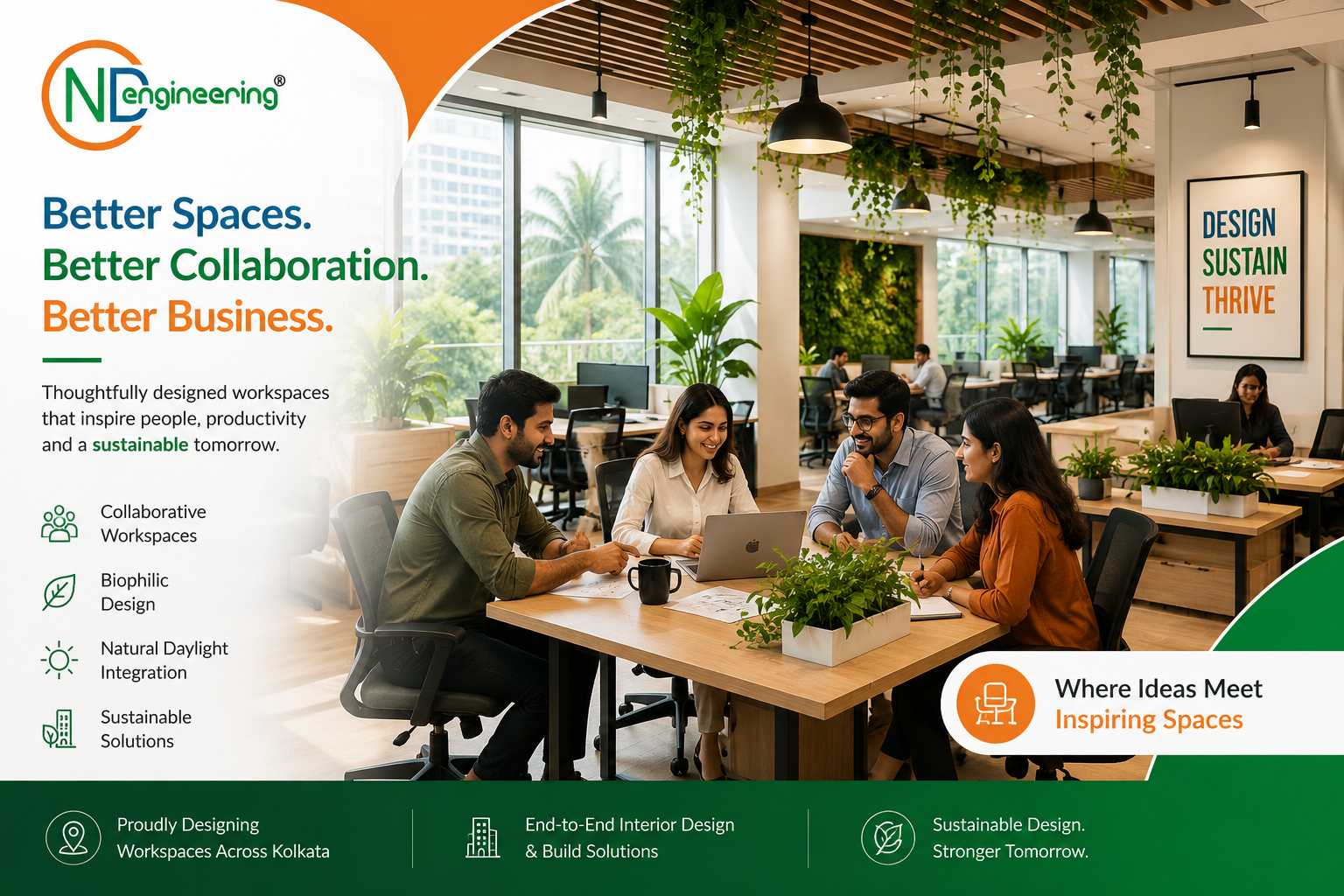
Understanding Commercial Office Interior Design
Commercial office interior design involves the strategic planning and execution of workplace environments that align with business operations, employee needs, and brand identity.
Unlike residential interiors, commercial office design must address:
- Departmental workflows,
- Technology integration,
- Fire and safety standards,
- Employee density,
- Acoustic performance,
- Energy efficiency,
- Scalability,
- And operational functionality.
A successful office design project balances:
Functionality
The office must support daily workflows efficiently.
Employee Experience
Employees need comfort, flexibility, collaboration, and focus zones.
Brand Identity
The workspace should visually represent company values and culture.
Sustainability
Modern offices should reduce environmental impact and operational costs.
Future Readiness
The workspace should adapt to organizational growth and evolving work styles.
Step 1: Commercial Workspace Planning
Workspace planning is the foundation of every successful office interior project.
Without strategic planning, organizations often experience:
- Wasted space,
- Poor workflow,
- Overcrowding,
- Communication barriers,
- Inefficient meeting areas,
- And future scalability problems.
Key Elements of Office Space Planning
1. Departmental Analysis
Understanding how teams operate is essential.
Questions to evaluate:
- Which teams collaborate frequently?
- Which departments require privacy?
- Which roles require focused work?
- What are the visitor interaction zones?
2. Employee Density Planning
The office should balance comfort and efficiency.
Modern office density standards generally include:
- Open workstations,
- Collaborative areas,
- Breakout spaces,
- Private meeting rooms,
- And wellness zones.
3. Workflow Optimization
Workspace layouts should reduce unnecessary movement and improve operational flow.
Examples:
- HR near reception,
- Meeting rooms near client zones,
- Collaborative departments positioned together,
- Executive areas separated from noisy zones.
4. Hybrid Workspace Planning
Many businesses in Kolkata now operate hybrid work environments.
This requires:
- Hot-desking systems,
- Flexible seating,
- Collaboration zones,
- Digital meeting integration,
- And multipurpose workspaces.
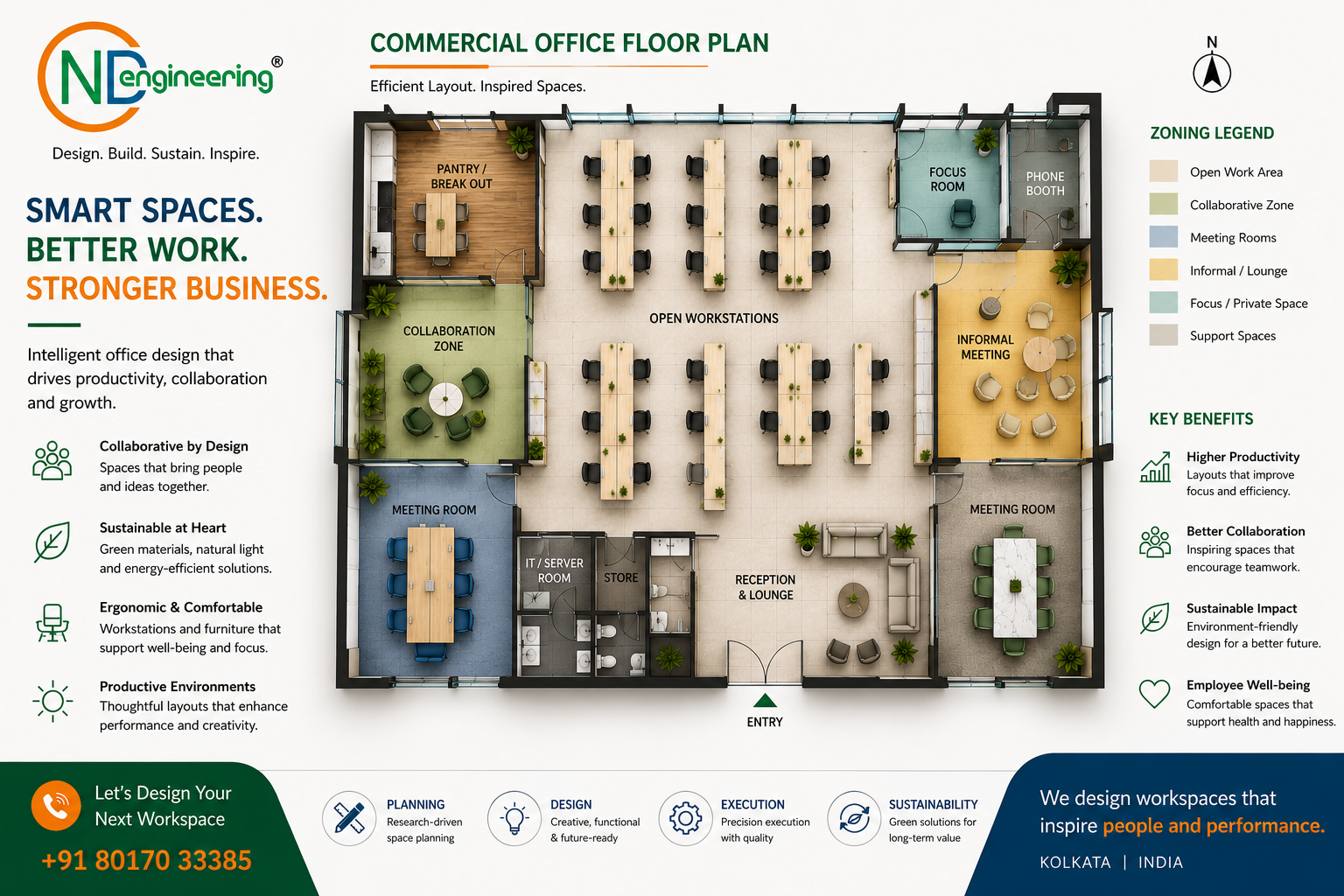
Step 2: Budgeting for Commercial Office Interiors
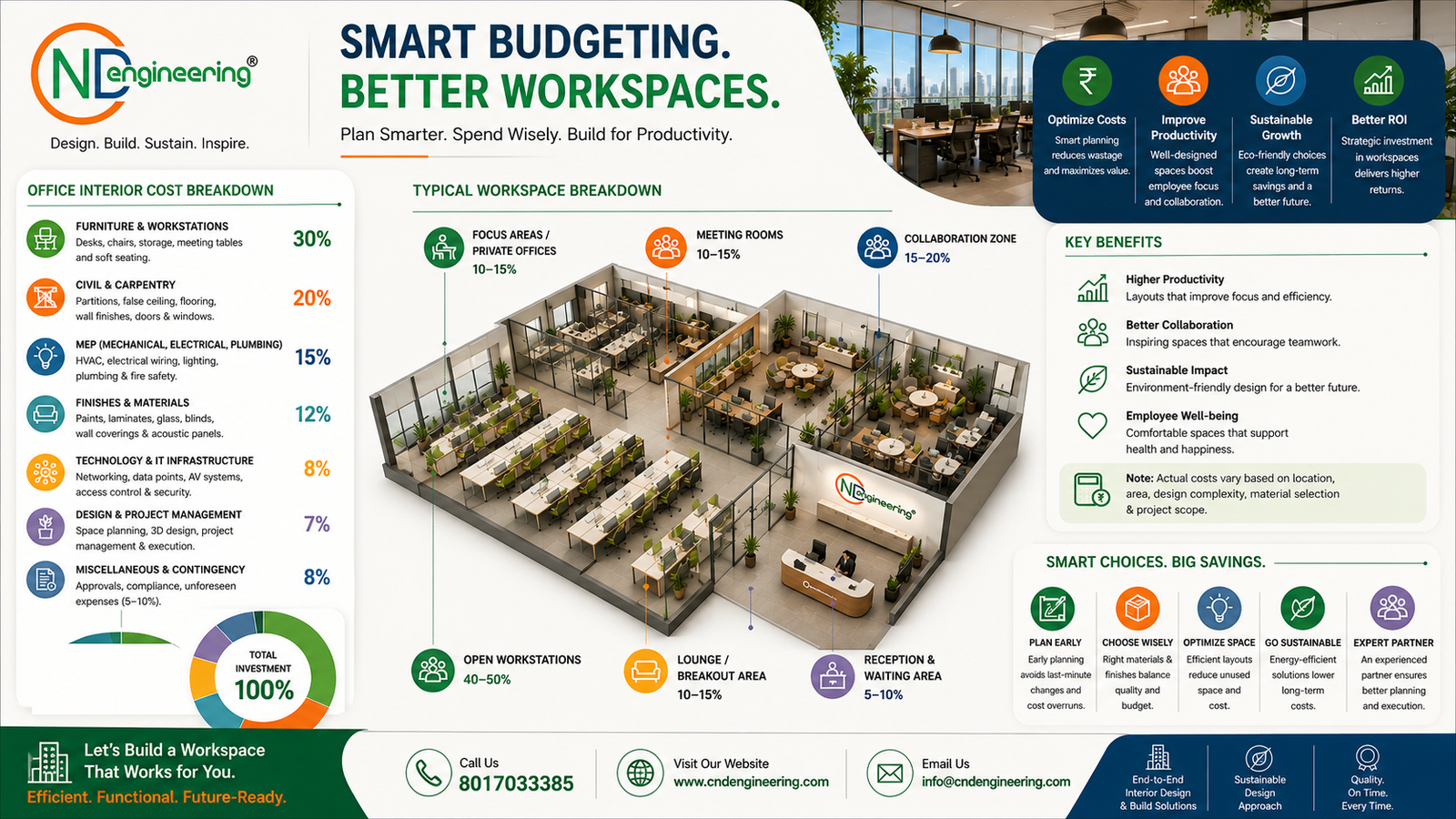
Budget planning is one of the most critical stages of office interior design.
Many organizations underestimate:
- Infrastructure costs,
- Technology integration,
- MEP systems,
- Furniture requirements,
- And execution timelines.
Main Cost Components
Interior Construction
Includes:
- Partitions,
- Ceilings,
- Flooring,
- Paint,
- Carpentry,
- And civil modifications.
Furniture
Includes:
- Ergonomic workstations,
- Executive cabins,
- Conference tables,
- Storage systems,
- Breakout furniture,
- And collaborative seating.
Electrical & Networking
Includes:
- Structured cabling,
- UPS systems,
- Lighting,
- Power distribution,
- And server infrastructure.
HVAC Systems
Air conditioning and ventilation significantly influence both comfort and energy consumption.
Branding & Graphics
Modern offices increasingly incorporate:
- Environmental graphics,
- Digital signage,
- Branded walls,
- And experiential design.
Average Office Interior Cost in Kolkata
Commercial office interior costs vary depending on:
- Materials,
- Location,
- Project scale,
- Design complexity,
- And sustainability requirements.
Typical ranges may include:
| Office Type | Estimated Cost Range |
|---|---|
| Basic Office Interiors | ₹1,200–₹1,800/sq.ft |
| Mid-Range Commercial Interiors | ₹1,800–₹3,000/sq.ft |
| Premium Corporate Workspaces | ₹3,000–₹6,000+/sq.ft |
Budget Optimization Tips
- Prioritize long-term durability over short-term savings.
- Invest in ergonomic furniture.
- Use modular systems for scalability.
- Plan electrical and HVAC early.
- Optimize natural daylight.
Step 3: Office Layout Design Strategies
The office layout directly affects:
- Collaboration,
- Communication,
- Privacy,
- Employee satisfaction,
- And operational efficiency.
Popular Office Layout Types
Open Office Layout
Best for:
- Startups,
- Collaborative teams,
- Technology companies.
Advantages:
- Improved communication,
- Flexible seating,
- Efficient space utilization.
Challenges:
- Noise,
- Distractions,
- Reduced privacy.
Cabin-Based Layout
Best for:
- legal firms,
- finance companies,
- executive-focused businesses.
Advantages:
- privacy,
- focused work,
- confidentiality.
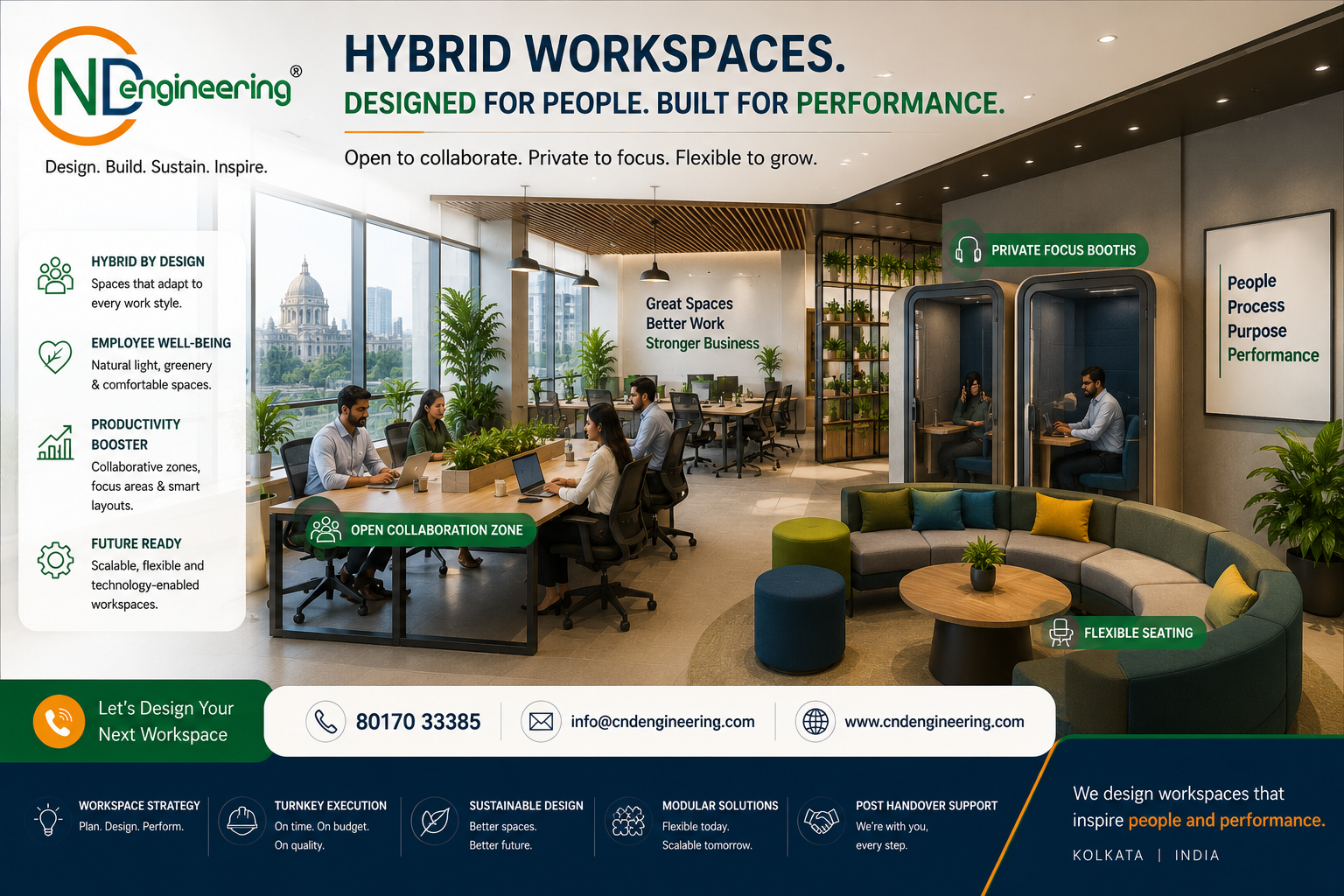
Hybrid Layout
Combines:
- collaborative zones,
- focus rooms,
- meeting spaces,
- and flexible seating.
This is increasingly the preferred model in modern commercial offices.
Activity-Based Workspaces
Employees choose work environments based on tasks.
Examples include:
- quiet pods,
- brainstorming areas,
- lounges,
- collaboration hubs,
- and phone booths.
Step 4: Materials Selection for Commercial Interiors
Material selection influences:
- durability,
- maintenance,
- acoustics,
- sustainability,
- aesthetics,
- and lifecycle costs.
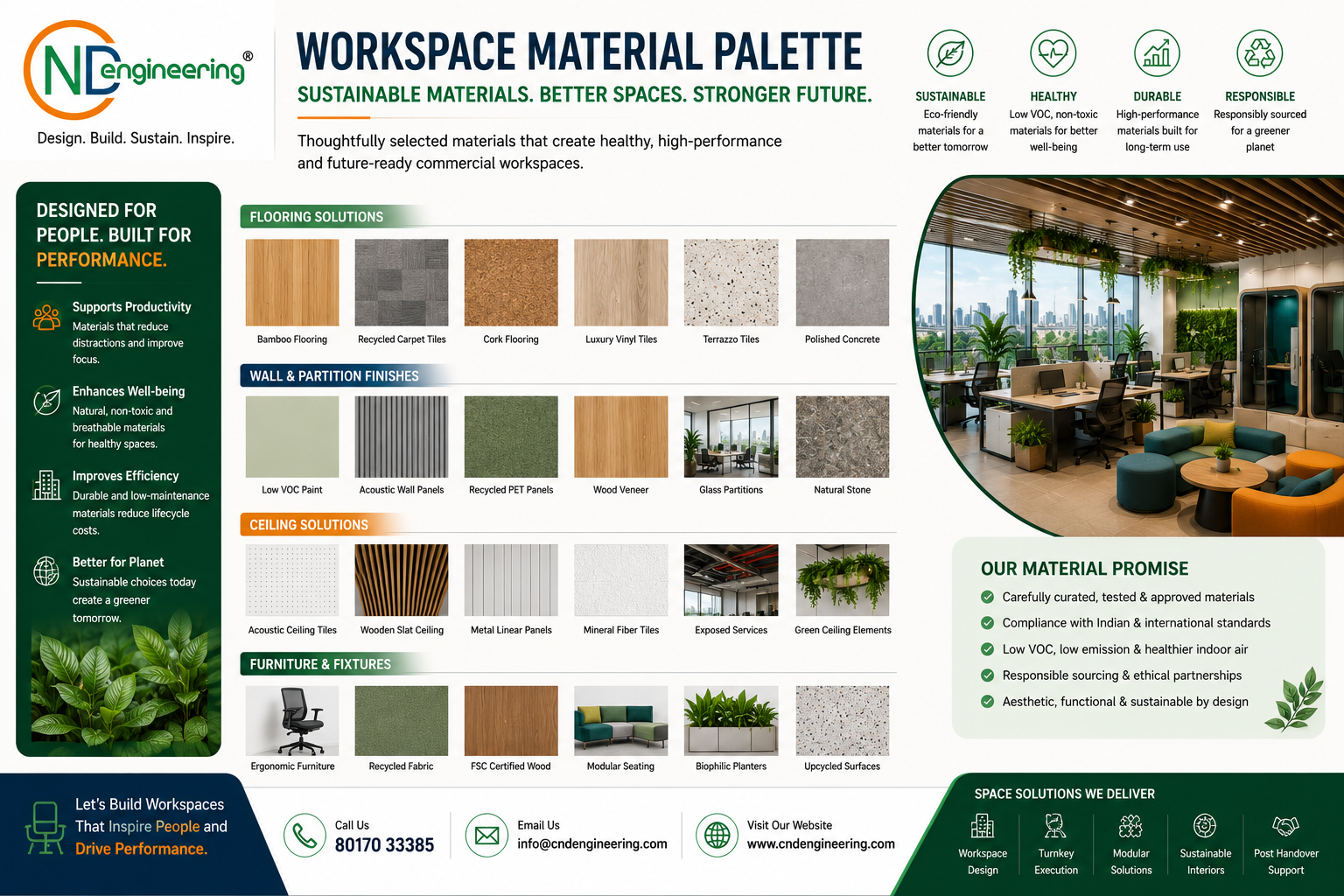
Common Commercial Interior Materials
Flooring
Popular options:
- carpet tiles,
- vinyl flooring,
- SPC flooring,
- porcelain tiles,
- and raised flooring systems.
Partitions
Options include:
- glass partitions,
- gypsum walls,
- modular systems,
- acoustic panels.
Ceilings
Common choices:
- gypsum ceilings,
- metal ceilings,
- acoustic baffles,
- exposed industrial ceilings.
Furniture Materials
Modern commercial furniture emphasizes:
- durability,
- ergonomics,
- modularity,
- and sustainable sourcing.
Sustainable Material Trends
Businesses increasingly prefer:
- low-VOC paints,
- recycled materials,
- FSC-certified wood,
- energy-efficient lighting,
- and eco-friendly finishes.
Step 5: Ergonomics & Employee Wellness
Ergonomics is no longer optional.
Poor ergonomic environments lead to:
- fatigue,
- back pain,
- reduced productivity,
- absenteeism,
- and workplace injuries.
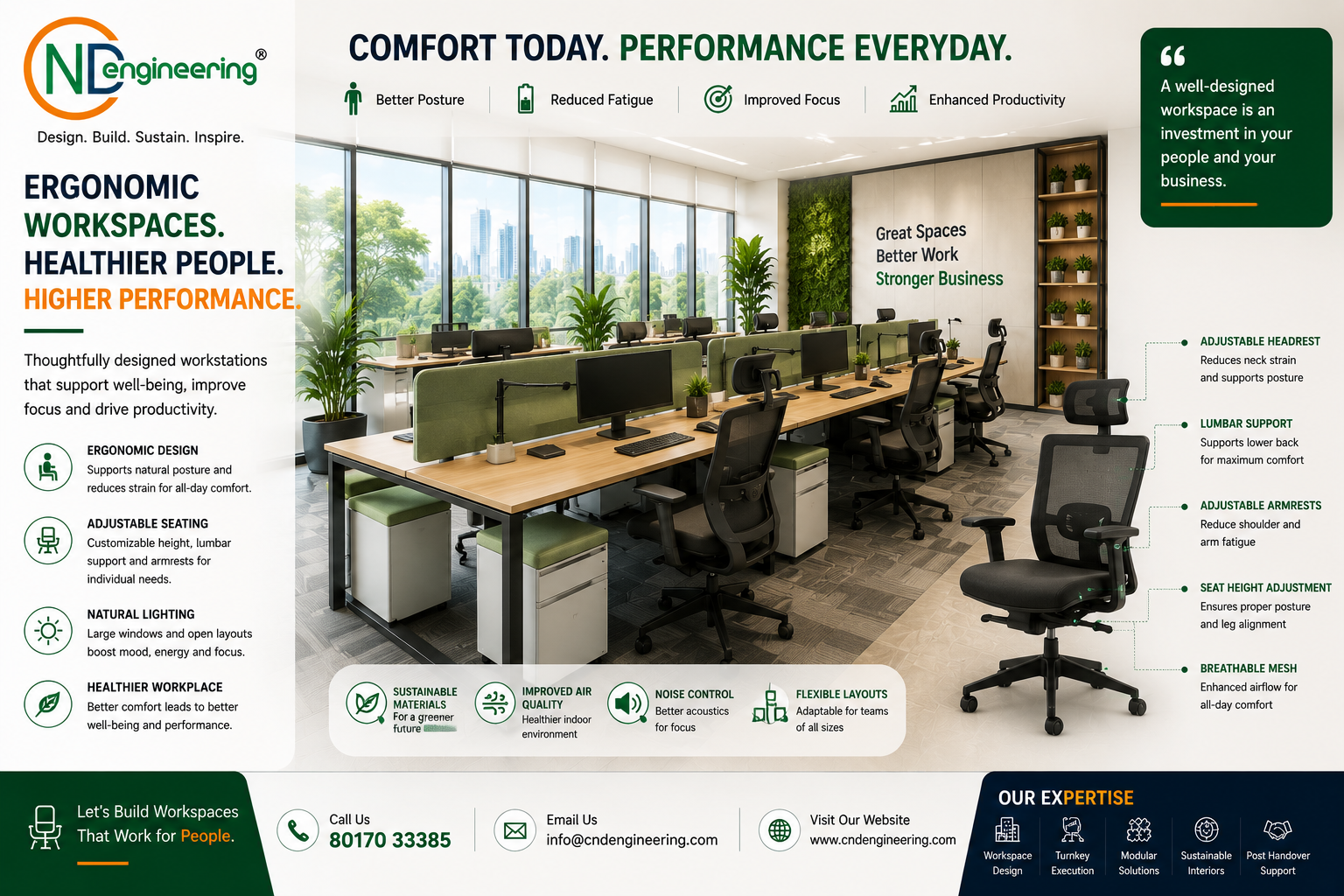
Essential Ergonomic Principles
Adjustable Seating
Employees should have:
- lumbar support,
- adjustable height,
- armrest flexibility,
- and posture alignment.
Desk Height Standards
Proper workstation alignment reduces musculoskeletal strain.
Monitor Positioning
Screens should support:
- neutral neck posture,
- reduced eye strain,
- and improved visibility.
Lighting Quality
Balanced lighting improves:
- alertness,
- comfort,
- and visual performance.
Wellness-Focused Workspace Features
Modern offices increasingly include:
- biophilic design,
- wellness rooms,
- breakout lounges,
- natural daylight,
- acoustic comfort,
- and indoor air quality systems.
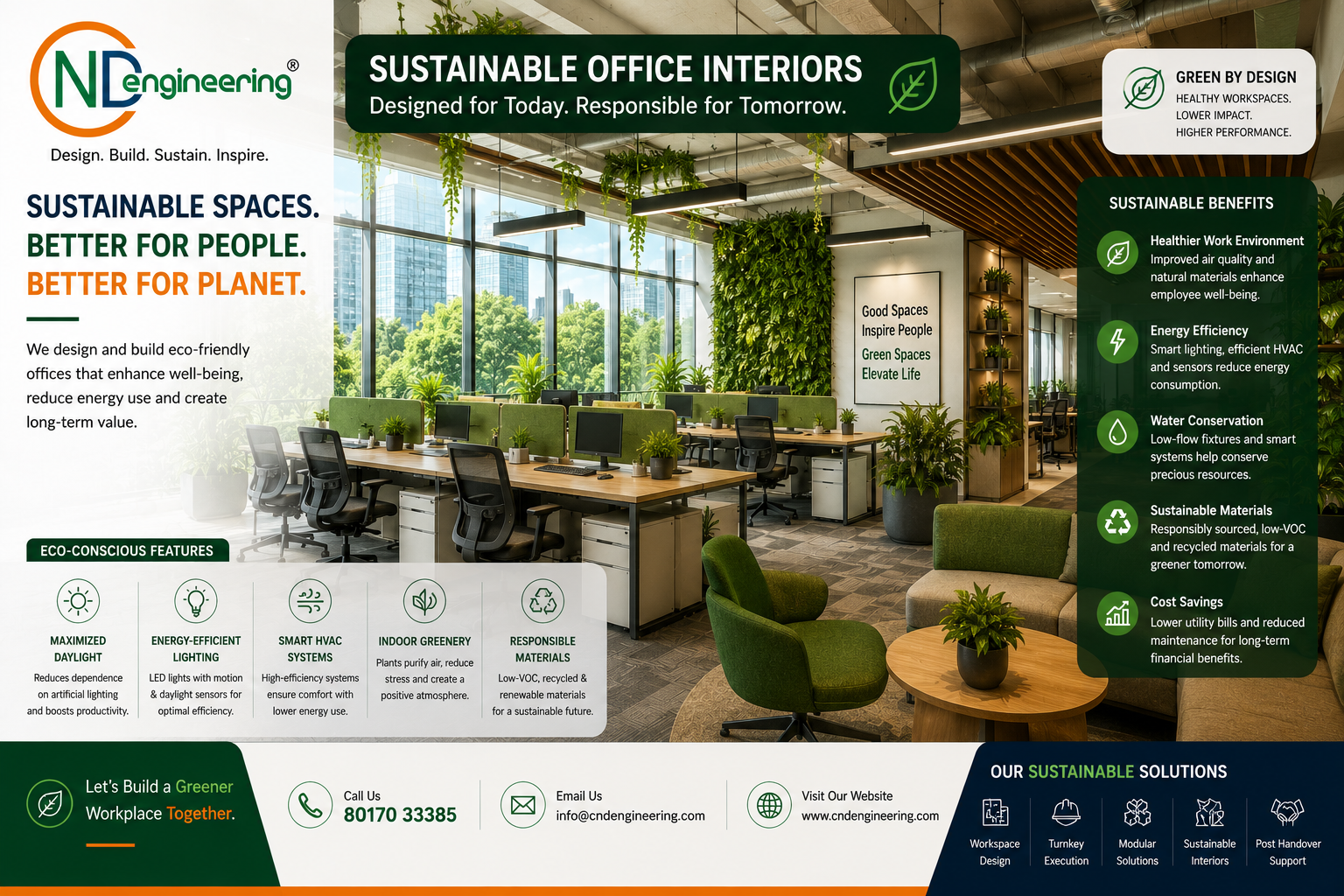
Step 6: Sustainable Office Design
Sustainability is becoming a core requirement for commercial office environments.
Green offices help organizations:
- reduce operational costs,
- improve employee wellness,
- achieve ESG goals,
- and strengthen brand perception.
Key Sustainable Office Strategies
Energy-Efficient Lighting
LED systems significantly reduce electricity consumption.
Daylight Optimization
Natural lighting improves:
- employee wellbeing,
- productivity,
- and energy efficiency.
HVAC Optimization
Efficient ventilation systems improve:
- thermal comfort,
- indoor air quality,
- and operational performance.
Sustainable Materials
Eco-friendly materials reduce environmental impact.
Smart Office Systems
Modern commercial offices use:
- occupancy sensors,
- automated lighting,
- smart HVAC controls,
- and energy monitoring systems.
Green Building Certifications
Many organizations pursue:
- LEED,
- IGBC,
- and WELL certifications.
These frameworks improve:
- sustainability,
- energy efficiency,
- employee wellness,
- and long-term operational performance.
Step 7: Commercial Office Execution Process
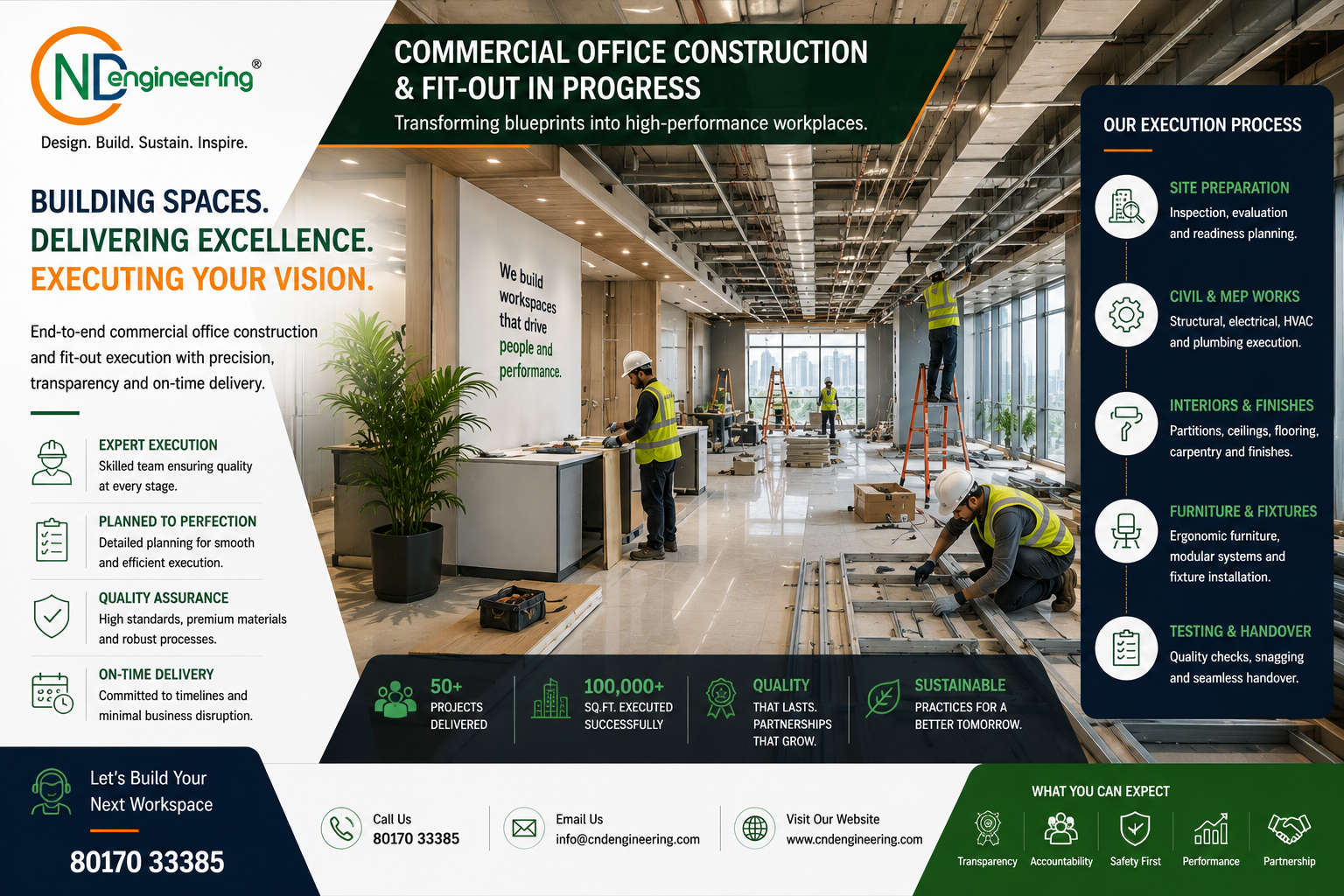
Execution quality determines whether the design vision is successfully implemented.
Typical Office Interior Execution Stages
1. Site Measurement & Survey
Includes:
- existing conditions,
- electrical mapping,
- HVAC analysis,
- and structural review.
2. Concept Design
Initial layouts, mood boards, and planning concepts are developed.
3. Detailed Design & BOQ
Construction drawings and bill of quantities are finalized.
4. Procurement
Materials, furniture, and equipment are sourced.
5. Civil & MEP Work
Includes:
- partition installation,
- electrical work,
- HVAC systems,
- networking,
- and plumbing.
6. Furniture Installation
Workstations, cabins, and collaborative spaces are installed.
7. Testing & Handover
Final inspections ensure operational readiness.
Importance of Turnkey Project Management
Turnkey execution helps businesses:
- reduce delays,
- control costs,
- improve accountability,
- and streamline coordination.
Step 8: Compliance & Safety Standards
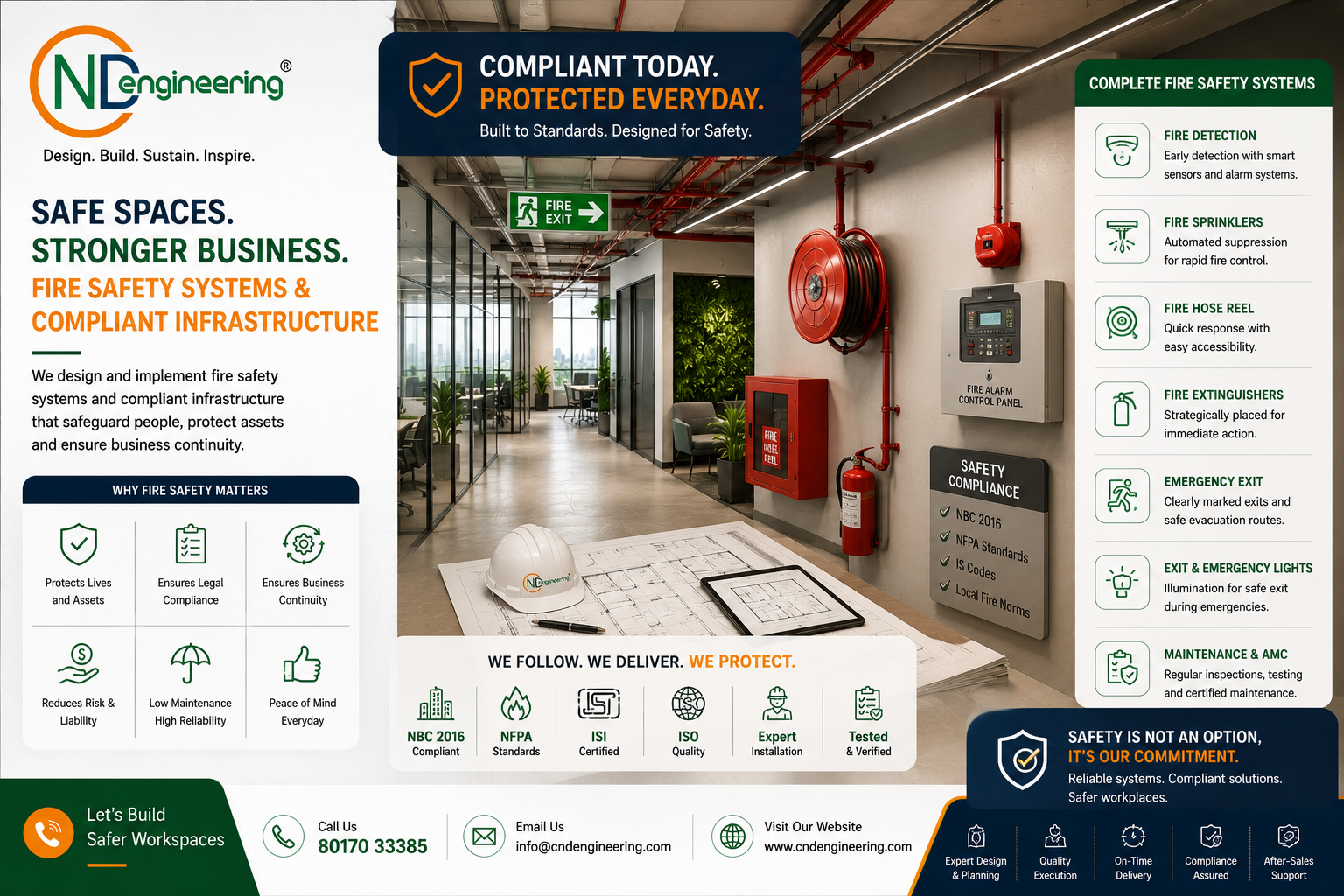
Commercial office projects must comply with:
- fire safety regulations,
- electrical standards,
- HVAC guidelines,
- accessibility norms,
- and local building requirements.
Important Compliance Areas
Fire Safety
Includes:
- fire exits,
- extinguishers,
- smoke detectors,
- sprinkler systems,
- and evacuation planning.
Electrical Compliance
Proper load calculations and safe power distribution are critical.
Accessibility Standards
Modern workplaces should support inclusive access.
Building Permissions
Projects may require approvals depending on scope and location.
Why Compliance Matters
Non-compliance can create:
- operational risks,
- legal complications,
- insurance problems,
- and safety hazards.
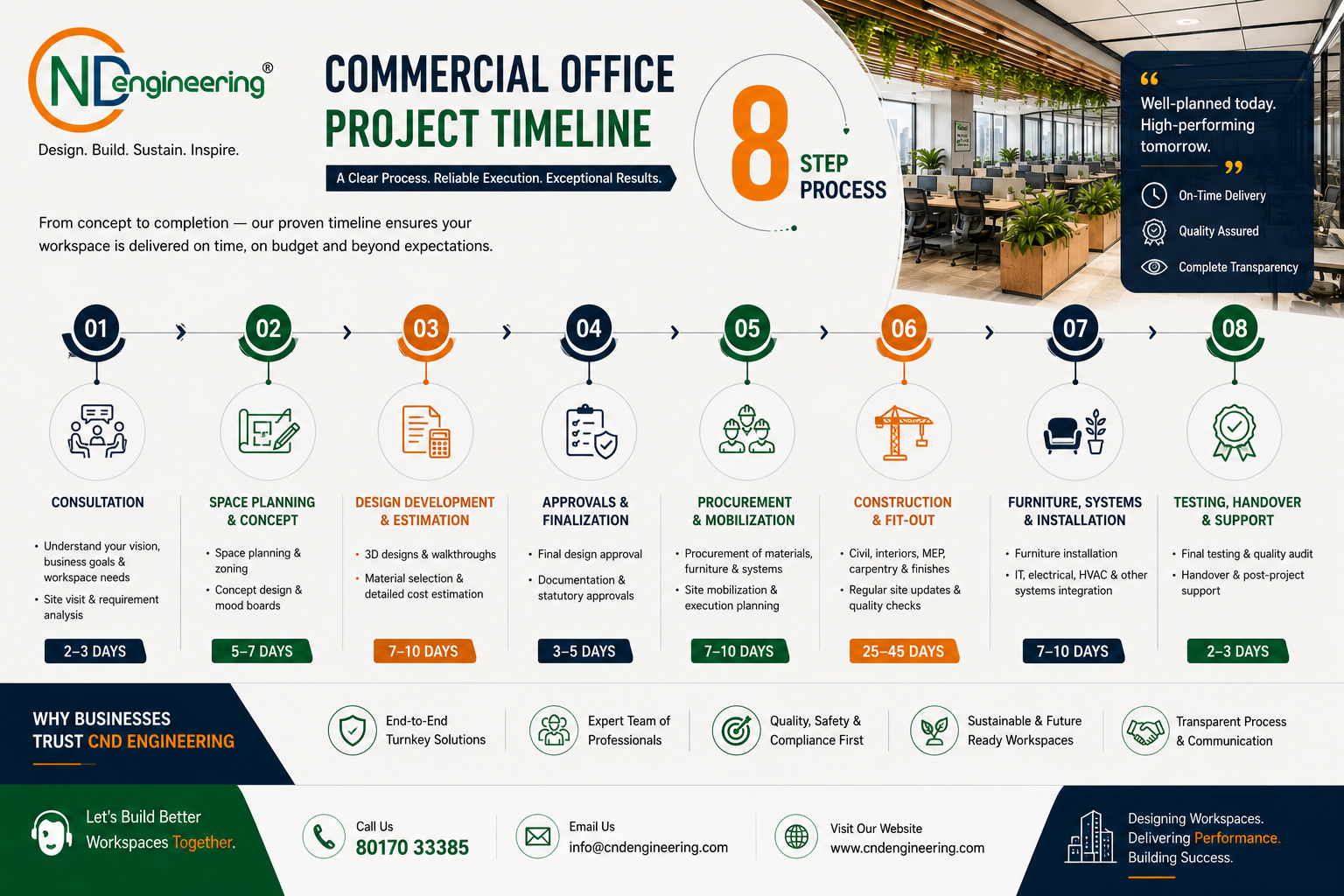
Step 9: Project Timelines
Commercial office timelines vary depending on:
- office size,
- design complexity,
- approvals,
- procurement,
- and execution scope.
Typical Timeline Estimates
| Project Stage | Approximate Duration |
|---|---|
| Planning & Design | 2–6 weeks |
| Approvals & Procurement | 2–4 weeks |
| Civil & MEP Work | 4–10 weeks |
| Furniture & Installation | 1–3 weeks |
| Testing & Handover | 1 week |
Common Causes of Delays
- design revisions,
- procurement issues,
- approval delays,
- poor coordination,
- and scope changes.
How to Reduce Delays
- finalize layouts early,
- use experienced project managers,
- choose reliable vendors,
- and implement milestone tracking.
Step 10: Workspace Productivity Optimization
High-performing workspaces improve:
- Focus,
- Collaboration,
- Employee satisfaction,
- And organizational efficiency.
Productivity-Focused Design Principles
Acoustic Management
Noise control is essential in open offices.
Solutions include:
- acoustic panels,
- sound-absorbing ceilings,
- carpet tiles,
- and phone booths.
Lighting Strategy
Balanced lighting supports:
- focus,
- energy levels,
- and comfort.
Collaboration Zones
Dedicated collaboration spaces improve teamwork.
Quiet Focus Areas
Employees need distraction-free environments for deep work.
Technology Integration
Modern offices require seamless digital infrastructure.
Measuring Workplace Performance
Organizations increasingly track:
- employee engagement,
- space utilization,
- meeting room efficiency,
- energy usage,
- and workplace satisfaction.
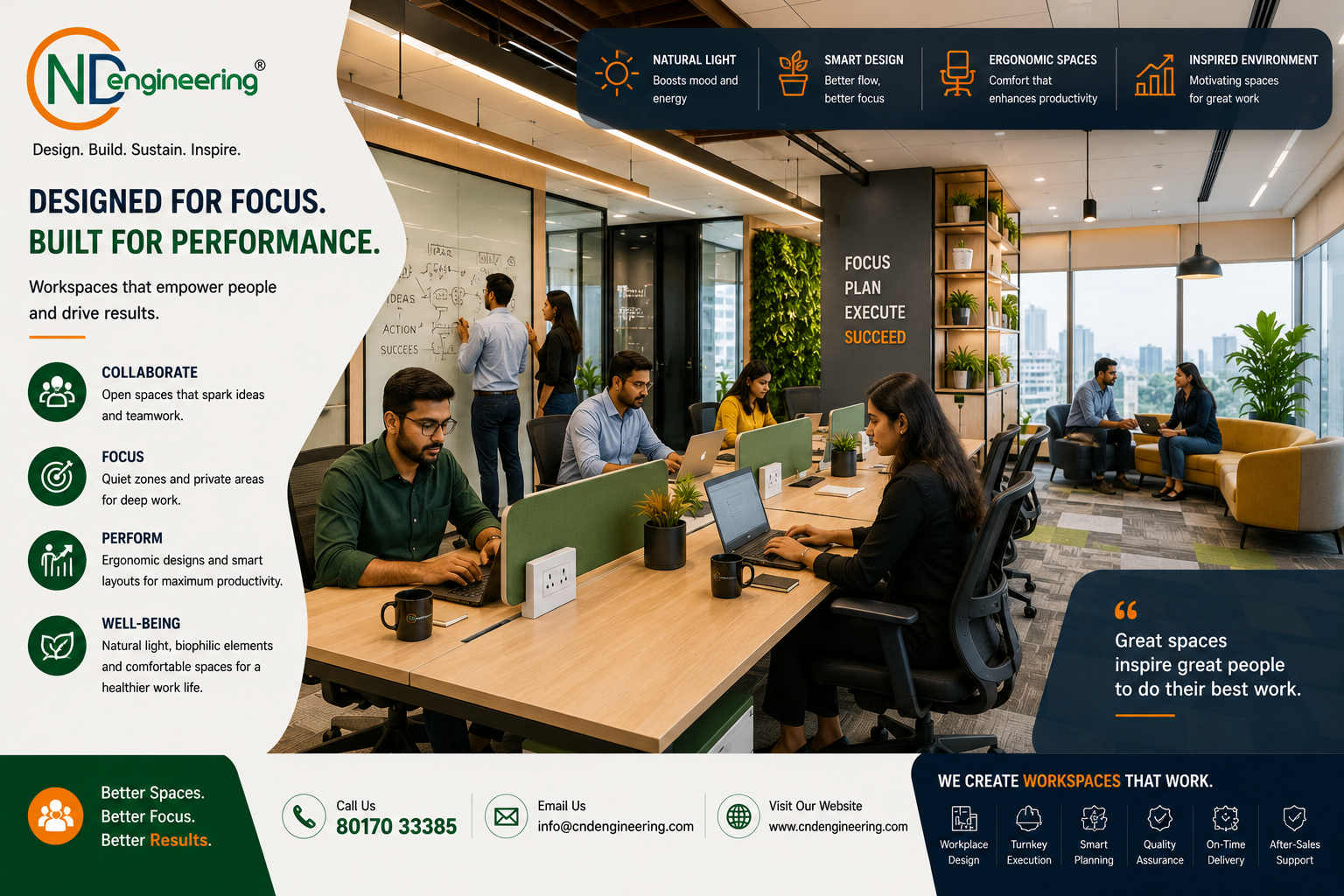
Future Trends in Commercial Office Design
The future workplace will increasingly focus on:
- flexibility,
- wellness,
- sustainability,
- AI integration,
- and employee experience.
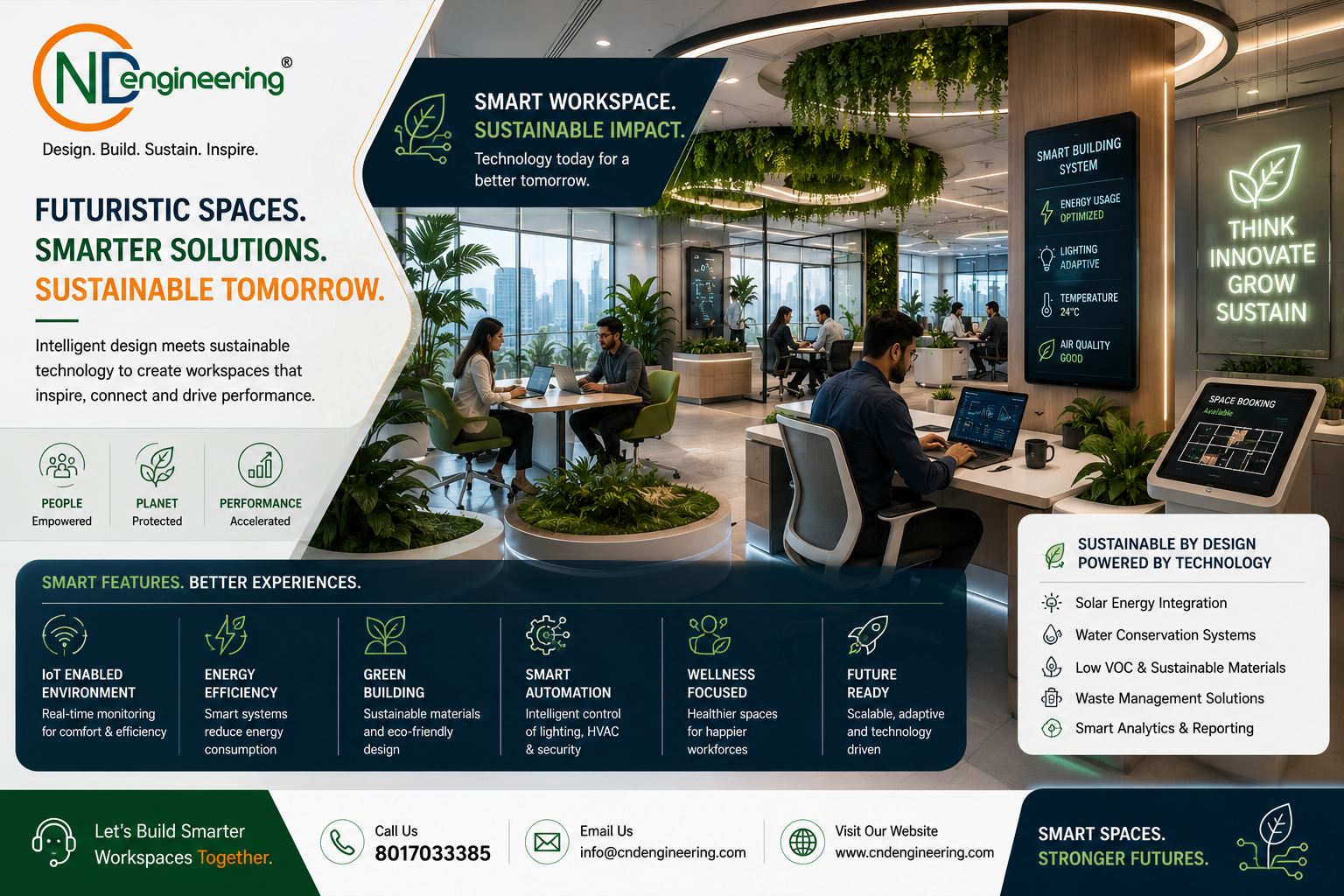
Key Trends for 2026
Smart Offices
AI-powered automation and occupancy analytics.
Biophilic Design
Nature-integrated environments for wellness.
Flexible Workspaces
Adaptable layouts supporting hybrid teams.
Wellness-Centered Design
Mental health and employee wellbeing are becoming priorities.
Sustainable Infrastructure
Businesses increasingly demand low-carbon workspaces.
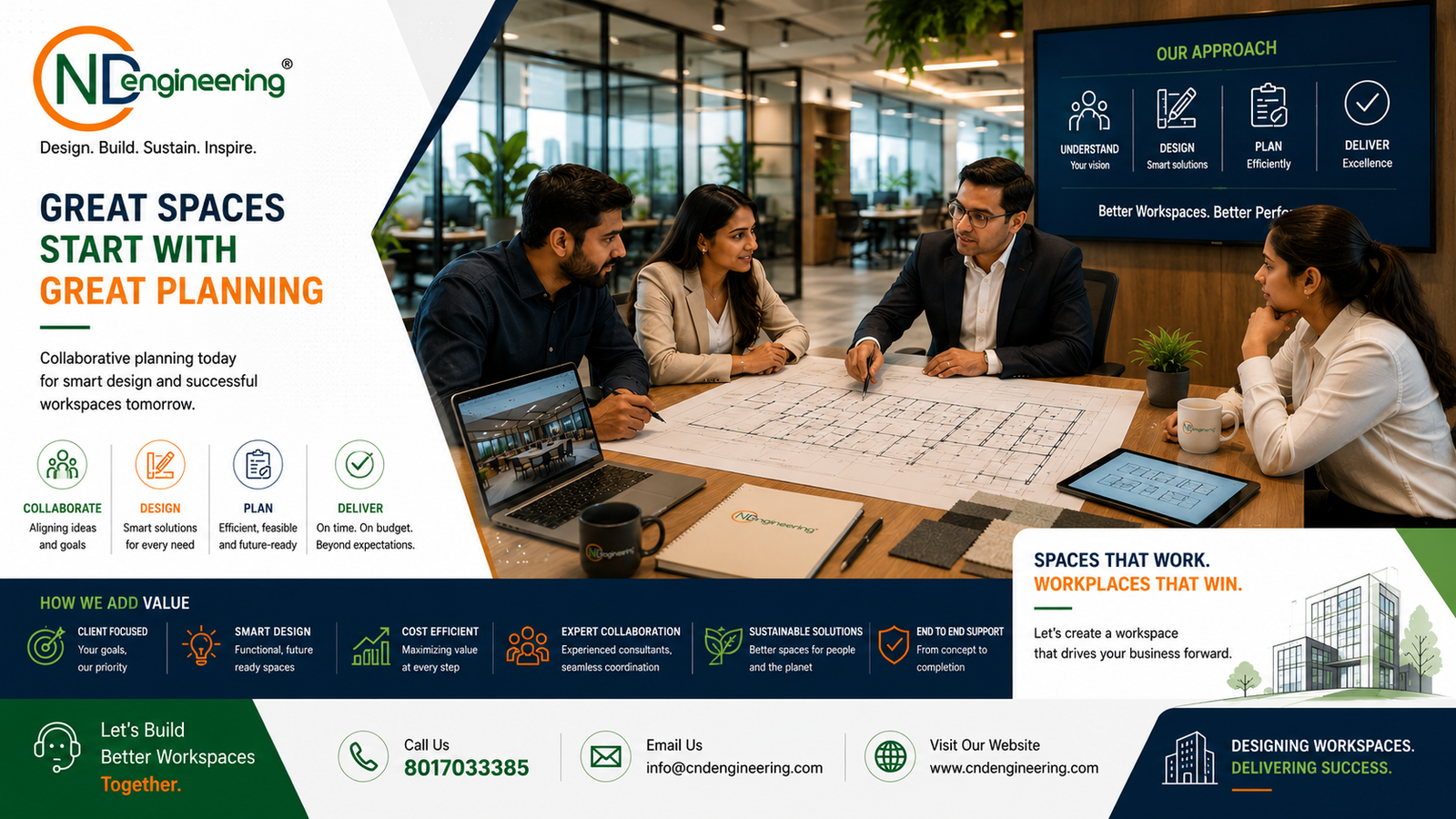
How to Choose the Right Commercial Interior Partner in Kolkata
Choosing the right office interior company significantly affects:
- project quality,
- budget control,
- execution timelines,
- and operational outcomes.
What Businesses Should Evaluate
Experience
Review completed commercial projects.
Technical Capability
Assess design, engineering, and execution expertise.
Turnkey Services
Integrated project management improves efficiency.
Sustainability Knowledge
Green office expertise is increasingly valuable.
Client References
Past project feedback helps verify reliability.
Questions to Ask Before Hiring
- What industries have you worked with?
- Can you handle turnkey execution?
- How do you manage timelines?
- What sustainability strategies do you recommend?
- How do you optimize workplace productivity?
Frequently Asked Questions (FAQ)
What is the average office interior cost in Kolkata?
Commercial office interiors in Kolkata generally range from ₹1,200 to ₹6,000+ per sq.ft depending on quality, materials, technology integration, and workspace complexity.
How long does a commercial office interior project take?
Most office projects require between 6 and 16 weeks depending on size and execution scope.
Why is ergonomic office design important?
Ergonomic workspaces reduce employee fatigue, improve comfort, and increase workplace productivity.
What are the benefits of sustainable office interiors?
Sustainable offices improve energy efficiency, employee wellness, operational savings, and ESG performance.
What is turnkey office execution?
Turnkey execution means one company manages design, procurement, construction, coordination, and project delivery.
Which office layout is best for modern businesses?
Hybrid layouts combining collaboration areas and focus zones are increasingly preferred in 2026.
Conclusion
Commercial office interior design is no longer just about creating attractive workspaces.
Modern offices are strategic business environments that influence:
- productivity,
- employee wellbeing,
- operational efficiency,
- sustainability,
- and long-term organizational growth.
Businesses in Kolkata increasingly require commercial interiors that support:
- hybrid work,
- employee experience,
- scalable growth,
- sustainability goals,
- and future-ready operations.
Successful office projects combine:
- intelligent planning,
- ergonomic design,
- quality materials,
- efficient execution,
- and productivity-focused strategies.
Organizations that invest in high-performance commercial workspaces gain measurable advantages in:
- talent retention,
- operational efficiency,
- client perception,
- and long-term business performance.
Ready to Build a High-Performance Commercial Workspace?
Whether you are planning:
- a new corporate office,
- workspace renovation,
- hybrid office transformation,
- or sustainable office upgrade,
Our team helps businesses design commercial environments that improve productivity, efficiency, and employee experience.
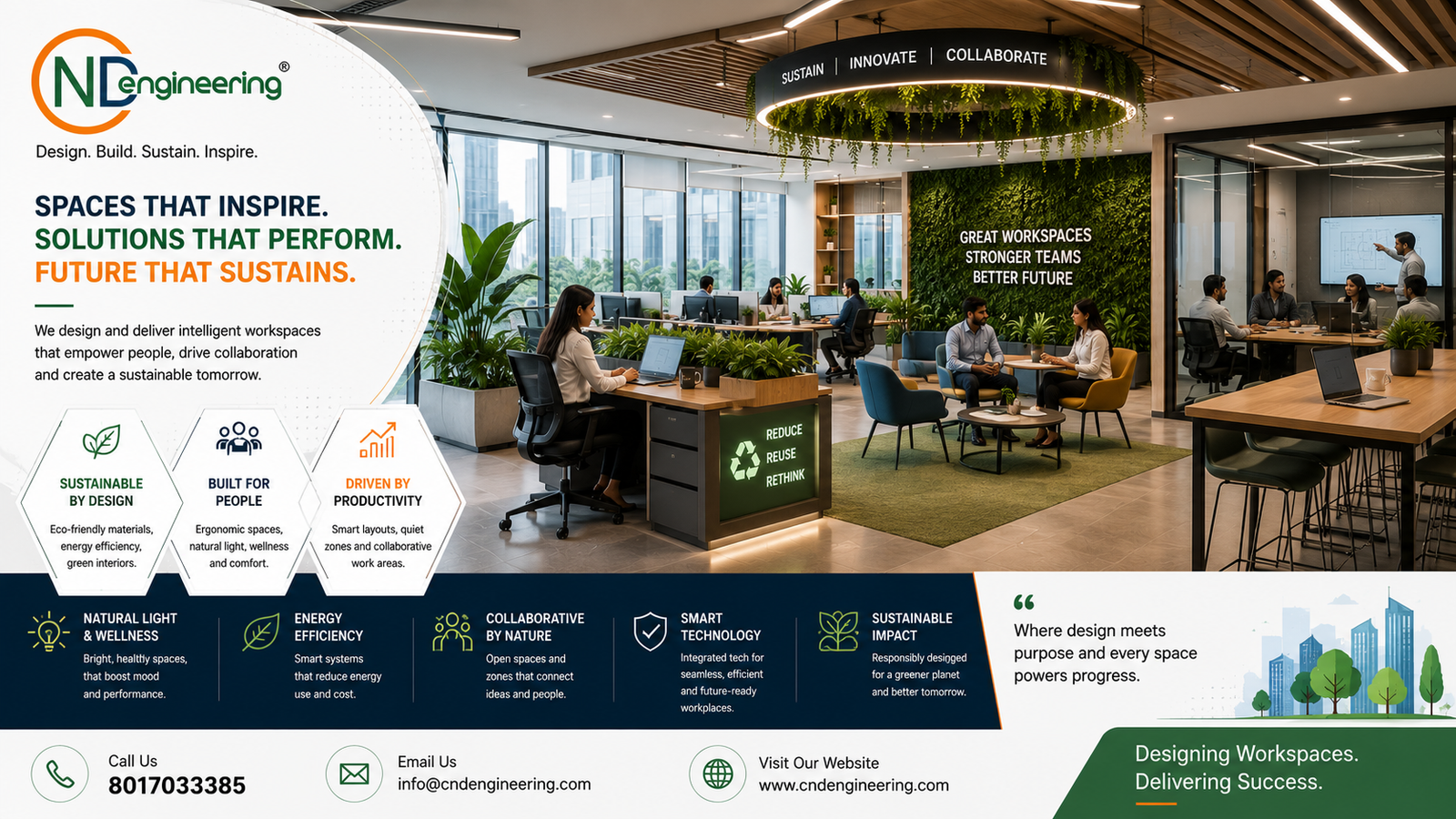
Plan a Future-Ready Commercial Workspace
Speak with CND Engineering Pvt Ltd for office interior design, turnkey fit-out execution, workspace planning, and sustainable commercial interiors in Kolkata.